Mobile Suit Gundam: Target in Sight

Publisher : Bandai Namco Games Genre : Action / Shooting Platform : PS3 Release Date : 2006-11-11 Num of Player : 2
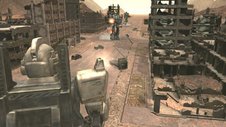
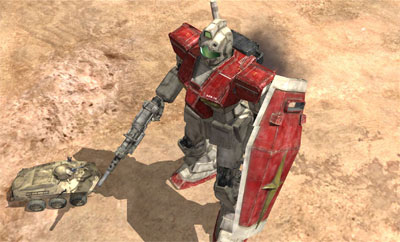
From Gundam game on Xbox 360, now we can play it on PS3. For this part, the story is about Kidosenchi Gundam that is marking a war. Maybe it is the tradition of BandaiNamco Game (Old name “ BANDAI”) that launches story about the first episode of Gundam in every Gundam. Source : msn.co.th


Tuesday, March 11, 2008

Kamen Rider 1


Kamen Rider 1 (Masked Rider 1) is a fictional character and main superhero or henshin character featured in Japanese tokusatsu. He first appeared in the television series Kamen Rider, the first in the famous Kamen Rider franchise of tokusatsu programmes. The primary protagonist of the series, Kamen Rider 1 is a motorcycle-riding superhero modelled upon a grasshopper. One of the most recognisable and iconic characters in Japanese entertainment, Kamen Rider 1 is as irrecoverably burnt onto to the cultural subconscious as the series itself.
In the original series, he was portrayed by Hiroshi Fujioka, who also performed most of his own stunts. Later, he was portrayed by Masaya Kikawada in the film Kamen Rider The First and its sequel, Kamen Rider The Next.

The character, before being transformed into a powerful hero, Takeshi Hongo was a college biochemistry student. An intelligent young man who enjoyed riding motorcycles, in the first episode of the series he witnessed the murder of a scientist at the hands of a Shocker kaijin named "Kumo Otoko" ("Spider Man"). He is then kidnapped and forced to undergo a procedure that turns him into a super-powered cyborg, but escapes before he can be brainwashed to do Shocker's bidding.
After this initial introduction, the series becomes, as with most tokusatsu programmes of the era, fairly formulaic. Each episode sees Hongo meeting another of Shocker's mutants, interacting briefly with supporting characters, such as his mentor Tachibana Tobei, and ultimately defeating the enemy, often with trademark "Rider Kick" or "Rider Punch" attacks.
However, this formula was drastically altered during the filming of episode ten. Fujioka, while attempting to perform a stunt on his motorcycle, shattered his leg. The surrounding episodes were quickly edited or otherwise altered to account for this, but Fujioka's injury forced him to take a longterm hiatus from acting, so production company Toei hired a new actor, Takeshi Sasaki, to play a new Kamen Rider character, dubbed Kamen Rider 2. In the show, it was explained that Shocker had built a duplicate of their original Kamen Rider cyborg in an effort to combat the threat that Hongo posed to their organization. This new character was introduced in episode 13, as Hongo's character was gradually phased out, a process that had been occurring since episode 11.
By the time Fujioka had recovered from his injuries, Kamen Rider had become fairly successful, and Fujioka found other work, so Sasaki continued to portray the main character of the series until episode 49, when Fujioka returned to the series full time. During this time, the two characters worked together as the "Double Riders", and Takeshi's character was written out. By episode 53, through the end of the series with episode 98, Hongo was the sole protagonist, but Sasaki returned for guest spots intermittently, in episodes 72-3, 93-4, and the finale.
Kamen Rider 1 and his partner Kamen Rider 2 next appeared in the sequel Kamen Rider V3. The titular V3 was Kazami Shiro, a junior of Hongo's, and begged them to turn him into a Kamen Rider after the murder of his family by the Destron organisation. Despite initially refusing, when the young man was mortally wounded assisting them, the two Riders transformed him into Kamen Rider V3, possessing both Kamen Rider 1's "skill" and Rider 2's "strength". The Double Riders were apparently killed detonating an atomic bomb, but reappeared alive and well later on in the series.
The Double Riders would make appearances in most succeeding Kamen Rider TV series, with the exception of Kamen Rider Amazon, Kamen Rider Super-1 (although they show up in the Super-1's movie) and Kamen Rider BLACK. Kamen Rider 1 would lead the senior Riders one last time in the final episodes of Kamen Rider BLACK RX. This would prove to be the last time the 10 original Riders appeared together onscreen. Starting with Kamen Rider Kuuga, no past Riders appear in the current TV series from the franchise.

Saturday, February 16, 2008

Episode Title List of Tiger Mask

# Title (This English translation is un-official) Air Date
1 The Yellow Devil 10/2/69
2 Tiger the Stormbringer 10/9/69
3 The Man Who Returned 10/16/69
4 Law of Tiger's Cave 10/23/69
5 Tiger Is Ready to Die 10/30/69
6 Terrible Death Match 11/6/69
7 The Bloodstained Tiger 11/13/69
8 Trap of Tiger's Cave 11/20/69
9 The Starved Gorilla Man 11/27/69
10 Fresh-Bomb Megaton Drop 12/4/69
11 The Marvelous World League 12/11/69
12 For Whom He Fights? 12/18/69
13 The Terrible Hell Operation 12/25/69
14 Secret Training in Tiger's Cave 1/1/70
15 Victory with Countless Wounds 1/8/70
16 Defeated Tiger 1/15/70
17 Tiger Awaked 1/22/70
18 The Fate Showdown 1/29/70
19 Two Hours Till the Starting Bout 2/5/70
20 Shadow of Tiger's Cave 2/12/70
21 The Red Fang with Revenge 2/19/70
22 Challenge for Tomorrow 2/26/70
23 Tiger Risks His Life 3/5/70
24 The Opening of the Maskmen League 3/12/70
25 Deadly Battle with the Golden Mask 3/19/70
26 Beyond the Glory 3/26/70
27 Open Your Eyes, Tiger 4/2/70
28 Tiger's Cave Revives 4/9/70
29 Challenger Strong 4/16/70
30 The Eternal Burning Spirit: Rikidozan Story 4/23/70
31 So Special Training at Daisetsuzan 4/30/70
32 His Special Attack Is Born! 5/7/70
33 The Marvelous Battle 5/14/70
34 A Hot-Blooded Boy in Tiger's Cave 5/21/70
35 Road to the Champion: Giant Baba Story 5/28/70
36 The Opening of All Asia Championship 6/4/70
37 The Yeti of Himalaya 6/11/70
38 Tiger Who Aims at the Champion 6/18/70
39 Victory Crown with Tears 6/25/70
40 Triumphant Return of Tiger the Phoenix 7/2/70
41 The Red Death Mask 7/9/70
42 No Tomorrow for Tiger 7/16/70
43 The Strongest Heel on the Earth 7/23/70
44 The Challenge from Kamikaze 7/30/70
45 A Boy with Nostalgia to Home Country 8/6/70
46 The Secret Mission of Tiger's Cave 8/13/70
47 Verbal Warfare in the Ring 8/20/70
48 The Battle with Kamikaze 8/27/70
49 Tiger Mask Revives 9/3/70
50 Give Your Affection to the Children 9/10/70
51 An Eagle and a Tiger 9/17/70
52 Win the the World League! 9/24/70
53 Mystery of the Miracles 10/1/70
54 A New Friend 10/8/70
55 The Sun in Soot and Smoke 10/15/70
56 The Black Deity 10/22/70
57 His V-Sign Calls Death In 10/29/70
58 Black V 11/5/70
59 A Reckless Challenge 11/12/70
60 Tiger and a Awkward Doctor 11/19/70
61 Road of "Shogi" King 11/26/70
62 The Black Challenger 12/3/70
63 "Meriken" Joe 12/10/70
64 Till When the Fortunate Bell Rings 12/17/70
65 Deadly Battle on the Maskmen Championship 12/24/70
66 The Terror of Tiger's Cave 12/31/70
67 Resurrection of the Yellow Devil 1/7/71
68 Phantom of the Yellow Devil 1/14/71
69 The Rule-Brake Challenger 1/21/71
70 Regret at the Ring 1/28/71
71 Tiger Meets the Crisis! 2/4/71
72 Mr. Fudo Comes Onstage 2/11/71
73 The Trump of Tiger's Cave 2/18/71
74 The Traitor No.3 2/25/71
75 Great Escape from Tiger's Cave 3/4/71
76 The Phantom Wrestlers 3/11/71
77 Tag Team in the Deadly Battle 3/18/71
78 Tiger Against Tiger 3/25/71
79 The Big Boss of Tiger's Cave 4/1/71
80 A Nova Is Born 4/8/71
81 The Promotor in Hell 4/15/71
82 The Deadly Battle in Cage 4/22/71
83 When Does Happiness Come? 4/29/71
84 An Oath for Victory 5/6/71
85 The Hunter of Death 5/13/71
86 Jekyll and Hyde 5/20/71
87 The Tiger Hunting Plan 5/27/71
88 Scaffold with Fire 6/3/71
89 Happiness of Yoshi-bo 6/10/71
90 The Uncrowned Champ 6/17/71
91 Devilish Spider Nest 6/24/71
92 Suspicion of the Mysterious Man 7/1/71
93 For Today's Life 7/8/71
94 The Substitute of Tiger 7/15/71
95 The Piranhan 7/22/71
96 Who Is Tiger Mask? 7/29/71
97 Presentiment of Defeat 8/5/71
98 The Desperate Tiger 8/12/71
99 Howl for Blood, Wolf! 8/19/71
100 Create Your Own Tomorrow 8/26/71
101 The Execution of Tiger's Cave 9/2/71
102 The Truth of Tiger's Cave 9/9/71
103 The Struggle Tiger's Cave 9/16/71
104 The Bloody Battle with Tiger's Cave! 9/23/71
105 Tiger Mask Goes Away 9/30/71

Tiger Mask


Tiger Mask: The Animated Series was made based upon manga by Ikki Kajiwara (story) and Naoki Tsuji (art), it is the pro-wrestling cartoon broadcasted from 1969 to 1971 in Japan. Tiger Mask was from Tiger's Cave that was secret organization, and once he'd been the villain wrestler called the "yellow devil." But, because he betrayed Tiger's Cave, Tiger kept fighting against the rough assassin who had life aimed at by Tiger's Cave and who attacked it one after another. Then, a variety of the hot fight with the wrestler left in the impression is unfolded with being an enemy. However, this work is not within frame of the mere pro-wrestling animate cartoon. Tiger Mask, that is, Naoto Date betrays organization, and keeps fighting because it was sworn to offer him for the people who weren't favored, the orphan because he himself was an orphan.

Saturday, October 6, 2007

Gundam Double X


General and Technical Data
Model number: GX-9901-DX
Code name: Gundam Double X
Unit type: satellite system loading mobile suit
Manufacturer: New United Nations Earth
Operator(s): New United Nations Earth; Vulture
Accommodation: pilot only, in standard cockpit in torso
First deployment: July A.W. 0015
Dimensions: head height 17.0 meters
Weight: empty 7.8 metric metric tons; max gross weight unknown
Armor materials: lunar titanium alloy armor and frame
Powerplant: ultracompact fusion reactor, power output rating unknown
Equipment and design features: "G-controller" removable control stick in cockpit, required to activate mobile suit and operate twin satellite cannon; sensors, range unknown
Fixed armaments: twin satellite cannon, mounted on backpack, powered by super-microwave energy beam relayed from lunar solar power station; 2 x hyper beam sword, stored in recharge racks on hip armor, hand-carried in use; 2 x breast launcher, multi-purpose launchers, mounted in chest; 2 x vulcan gun, fire-linked, mounted in head
Optional fixed armaments: "defense palette" shield, mounted on left forearm
Optional hand armaments: buster rifle; G-hammer; twin beam sword; beam javelin

Technical and Historical Notes
As the New United Nations Earth consolidated its power in its plot for world domination during the post-7th Space War in the After War Era, the military began development of advanced new mobile weapons. When the crew of the Vulture land battleship Freeden learned of the existence of a new mobile suit equipped with the devastating satellite system and went to investigate, they were forced to surrender at the New UNE's Zonder Epta base under the threat of the new GX-9901-DX Gundam Double X. However, the Freeden crew soon managed to make their escape, and Vulture pilot Garrod Ran captured the Gundam Double X for their own use.

The Double X was a great improvement over its GX-9900 Gundam X predecessor. It mounted a much more powerful twin satellite cannon, as well as improved hyper beam swords and a wide variety of hand armaments. However, one critical difference between the Double X and the GX was its lack of a flash system; instead, the recorded brainwaves of Jamil Neate - stored in the computer of his wrecked original Gundam X which was recovered by the New UNE - were recorded in the Double X's control computer, allowing a non-Newtype pilot to activate the satellite system and fire the Double X's twin satellite cannon. Like the Gundam X, a G-controller unit was required to activate the Double X and fire the twin satellite cannon. Fortunately for Garrod, his G-controller that he used on his old GX was compatible with the Double X, allowing him to use its devastating weapon. In the last battle of the 8th Space War, the Double X was severely damaged in a final duel with the Frost brothers.

Miscellaneous Information
Pilot: Garrod Ran
Appearances: After War Gundam X
Original mechanical designer: Kunio Okawara

Lineart
Beam rifle
G-controller (Gundam Double X)
G-controller (Gundam X )
Hyper beam swor dShield
Twin satellite cannon

Saturday, June 23, 2007

Dark Gundam


The Dark Gundam began its existence as the Ultimate Gundam, a revolutionary new mobile fighter developed by Dr. Raizo Kasshu and his son Kyoji at the space colony of Neo Japan. Thanks to the miracle of nanotechnology, this unique machine possessed unlimited powers of self-multiplication, self-recovery, and self-evolution.
However, the Ultimate Gundam was stolen by Kyoji Kasshu and taken to Earth, where it metamorphosed into the terrifying Dark Gundam. Now this dangerous machine is hidden somewhere on the planet, infecting the dueling Gundam Fighters with biomechanical DG Cells and gathering a rampaging Dark Army to overrun Earth's cities.
In hopes of averting a global disaster, Neo Japan's government dispatches Dr. Kasshu's younger son Domon to Earth, with orders to simultaneously win the 13th Gundam Fight and track down the rogue Dark Gundam.


Head height : 23.9 meters (in final mode)
Base weight : 41.2 tons (in final mode)
Max. load : 84.9 tons (in final mode)
Armormaterials : Gundarium alloy super ceramic composite, rare metal hybrid multilayered materials
Armament : vulcan x 4Dark Finger x 2beam cannons
Pilot : Kyoji Kasshu


Mode : Final
Power : 41.24
Speed : 67.39
Offense : 64.86
Defense :7.61
Search : 37.20
Adaptation : 49.48
Total : 307.78

Mobile Fighter G Gundam

After Mobile Suit Victory Gundam finished airing in Japan in early 1994, Bandai celebrated Gundam's 15th anniversary by trying something new: free the franchise from the continuity of the the Universal Century (and sell more model kits). Thus, the alternate universes were born that are the settings for every TV series following Victory Gundam. Premiering in 1994, G Gundam was the first alternate universe series, and perhaps one of the most controversial. Directed by Giant Robo's Yasuhiro Imagawa, this series takes a vastly different approach to the Gundam saga. Instead of having wars between the colonies and the Earth, a fighting tournament is held to determine the ruler of the colonies. Called the Gundam Fight, it is held once every four years by the United Colonies Federation. Each country has its own representative Gundam (some of which are really ridiculous looking), and the Gundams fight on Earth until only one is left. Set in FC 60, this series chronicles the 13th Gundam Fight and stars Neo Japanese Gundam Fighter Domon Kasshu, who is in the fight as much to win as to fulfill a personal quest. The series aired on Cartoon Network in 2002 and is available on DVD. Please note that the names of various mobile suits were changed for the American release. The reviews here follow the original Japanese names devised by Sunrise. Although some of the changes don't make sense, the list below documents all the changes.

Monday, June 18, 2007

Psycho Gundam


General and Technical Data
Model number:
MRX-009
Code name: Psyco Gundam
Unit type: prototype Newtype use transformable mobile armor
Manufacturer: Murasame Research Institute
Operator: Titans
First deployment: UC 0087
Accommodation: pilot only, in panoramic monitor/linear seat cockpit in head
Dimensions: mobile suit mode: overall height 41.0 meters, head height 40.0 meters; mobile fortress mode: overall height 30.2 meters, wingspan 32.4 meters
Weight: empty 214.1 metric tons; max gross 388.6 metric tons
Construction: gundarium alloy on semi-monocoque frame
Powerplant: Minovsky type ultracompact fusion reactor, output rated at 33600 kW
Propulsion: rocket thrusters: 2 x 84000 kg; Minovsky craft system: 500000 kg total (operable in mobile fortress mode only); vernier thrusters/apogee motors: 6
Performance: maximum thruster acceleration: 0.43 G mobile suit mode, 1.72 G mobile fortress mode; maximum speed Mach 0.5 (mobile fortress mode)
Equipment and design features: sensors, range 10200 meters; psycommu system; psycho-control chair in
cockpit (subsequent upgrade); anti-beam coating on armor
Fixed armaments: 3-barrel scattering mega particle gun, power rated at 4.8 MW per barrel, mounted in torso; 10 x beam gun, power rated at 2.0 MW, emitter barrels mounted as fingers in hands; 2-barrel beam gun, mounted in head; shield, mounted on left forearm
Technical and Historical Notes
As the Earth Federation Forces' Titans force continued to build up its military and political power in its crusade to rule the Earth Sphere with an iron fist, one area of research actively pursued by the Titans was "cyber Newtypes" - artificially-engineered Newtypes who could operate revolutionary new Newtype-controlled weapons. At their Murasame Laboratory in Japan, the Titans built the Federation's first Newtype-use unit, the MRX-009 Psyco Gundam. Equipped with a psycommu ("psychic communicator") system similar to that developed by the Principality of Zeon during the One Year War (hence the name "Psyco," which is short for "psycommu"), the Psyco Gundam's tremendous beam weapon firepower could be controlled by the pilot's mere thoughts. The Psyco Gundam was heavily armed, sporting a 3-barreled scattering beam gun in its chest, ten beam guns in its fingers and a 2-barrel beam gun in its head, making the unit capable of attacking several targets at one (or levelling lots of real estate). Due to its massive size, the Psyco Gundam could transform into a "mobile fortress" mode equipped with a Minovsky craft system to give it high-altitude atmospheric flight. The Psyco Gundam's chosen pilot was Murasame Labs' cyber Newtype "Number Four," or Four Murasame, and the unit was soon dispatched to destroy the AEUG and Karaba forces operating on Earth. The Psyco Gundam was severely damaged during an AEUG mission to launch Kamille Bidan and his RX-178 Gundam Mark II back out into space, and the Psyco Gundam was taken to the Titans' Kilimanjaro base in Africa, where it would be repaired and equipped with an experimental new "psycho-control chair," further enhancing Four's abilities to control the Psyco Gundam.

Miscellaneous Information
Pilot(s):
Four Murasame, Ben Wooder
Appearances: Mobile Suit Zeta Gundam

Original mechanical designer: Katsuji Murakami (principal design), Kazumi Fujita (cleanup)